
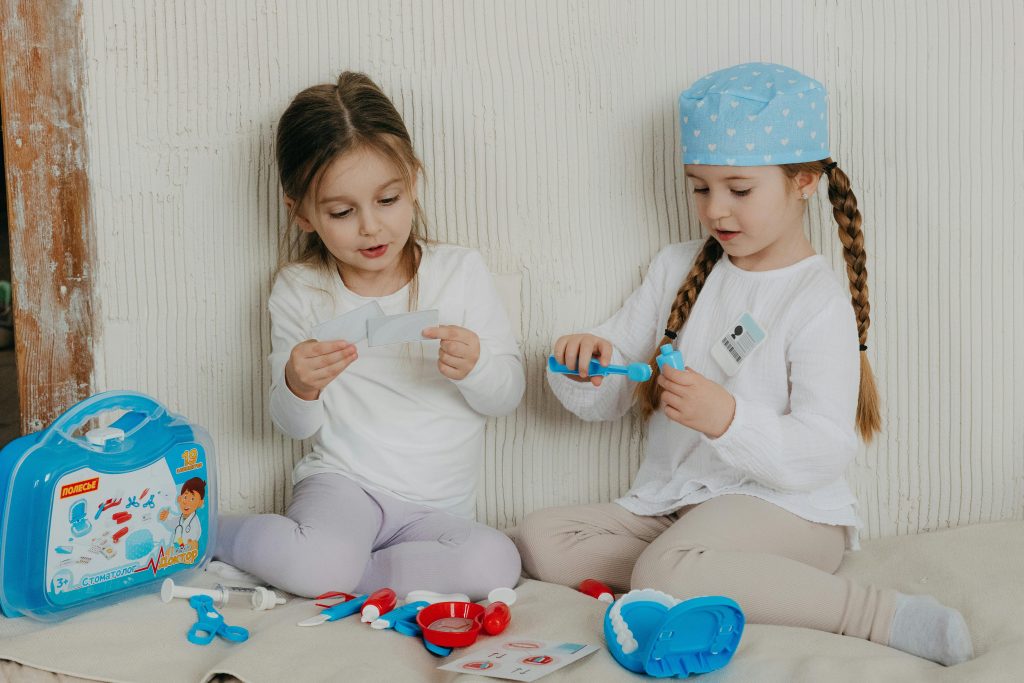

The Magic of Pretend Play: Why Imagination Matters
Pretend play—often called imaginative or make-believe play—is one of the most powerful (and fun!) ways children learn about the world. Through storytelling, role-playing, and a little bit of magic, kids explore their creativity while building essential social and emotional skills.
And the best part? This kind of play naturally grows with your child.
How Pretend Play Evolves by Age
Around age 2:
Toddlers begin acting out simple, familiar scenarios using realistic toys like dolls, stuffed animals, or figures. Their play often mirrors everyday life. You might see your child “walk” a stuffed dog or give it a drink from a pretend bowl—small moments that reflect big learning.
Around age 3:
This is when symbolic play begins. Children start using objects in creative and unexpected ways. A cardboard box becomes a crib, a block turns into a meowing cat, or an empty bowl suddenly holds a delicious imaginary meal. Their imagination starts to take the lead.
Ages 3–5:
Welcome to the golden age of pretend play. During these years, children create richer stories, build entire fantasy worlds, and begin playing more socially with others. Role-playing becomes more dramatic and collaborative, often involving costumes, characters, and evolving storylines. While this stage peaks in the preschool years, imaginative play continues well into later childhood.
Why Pretend Play Matters
Pretend play supports development in key areas:
- Creativity & Problem Solving : Because there are no rules in pretend play, kids are free to invent, explore, and experiment. A stick can become a wand, a crown can be invisible, and anything is possible. This open-ended play strengthens creative thinking and flexible problem solving.
- Emotional Development: Pretend play gives children a safe space to explore emotions. They might comfort a crying doll or act out a scary monster. These experiences help kids better understand feelings—their own and others’—and practice managing them.
- Social skills: When children play pretend together, they learn how to cooperate, negotiate roles, and resolve conflicts. They also begin to understand that others may think and feel differently—an important concept known as perspective-taking
- Executive functioning: Imaginative play challenges kids to hold ideas in mind, switch between roles, and follow storylines—all of which build memory, focus, and flexible thinking.
- Language and Communication: The more detailed a child’s pretend world becomes, the more they use language to describe it. This leads to stronger vocabulary, storytelling abilities, and communication skills.
How to Encourage Pretend Play
You don’t need elaborate setups to spark imagination—just a little intention and a willingness to join in.
Offer Open-Ended Materials
For younger children, realistic toys like dolls, play kitchens, or animal figures are a great starting point. As kids grow, introduce costumes, props, and everyday objects they can transform into anything they imagine.
Join Their World
Even a few minutes of playtime each day can make a big difference. Let your child take the lead—step into their story, follow their rules, and embrace their ideas. Whether you’re a dragon, a doctor, or a dinner guest at a pretend restaurant, your participation strengthens both their development and your connection.
Model Imagination
Show your child how objects can become something new. Pretend a spoon is an airplane or a blanket is a superhero cape. These small moments inspire kids to think creatively on their own.
Pretend play isn’t just a way to pass the time—it’s how children make sense of their world, express themselves, and build skills that last a lifetime. So the next time your child invites you into their imaginary universe, say yes. You might be stepping into something much bigger than it seems.
Source: The Power of Pretend Play for Children – Child Mind Institute

